
Their Outlook Regarding Collaborations and Why They Remain Few and Far Between
Within an industry built on label collaborations as a reliable revenue lever, The Row has steered in the opposite direction instead. Mary-Kate and Ashley Olsen built the label on a philosophy of restraint, and that restraint extends directly to how — and whether — the brand works with outside partners. Whereas rivals produce capsule collections with footwear labels, artists, or competing maisons each season, The Row has issued scarcely any. Far from accidental, this scarcity is a intentional strategy — both business and creative — that shapes every part of how the house operates, from its runway shows to the design of the row bags that anchor its accessories line.
To understand the reason joint projects are so rare at The Row, it’s worth examining its founding story as well as its approach to pricing and its long-term positioning within luxury fashion.
The Olsens never intended to build a buzz-chasing brand. They set out to build something resembling a design studio — hushed, considered, and slow-moving by intention.
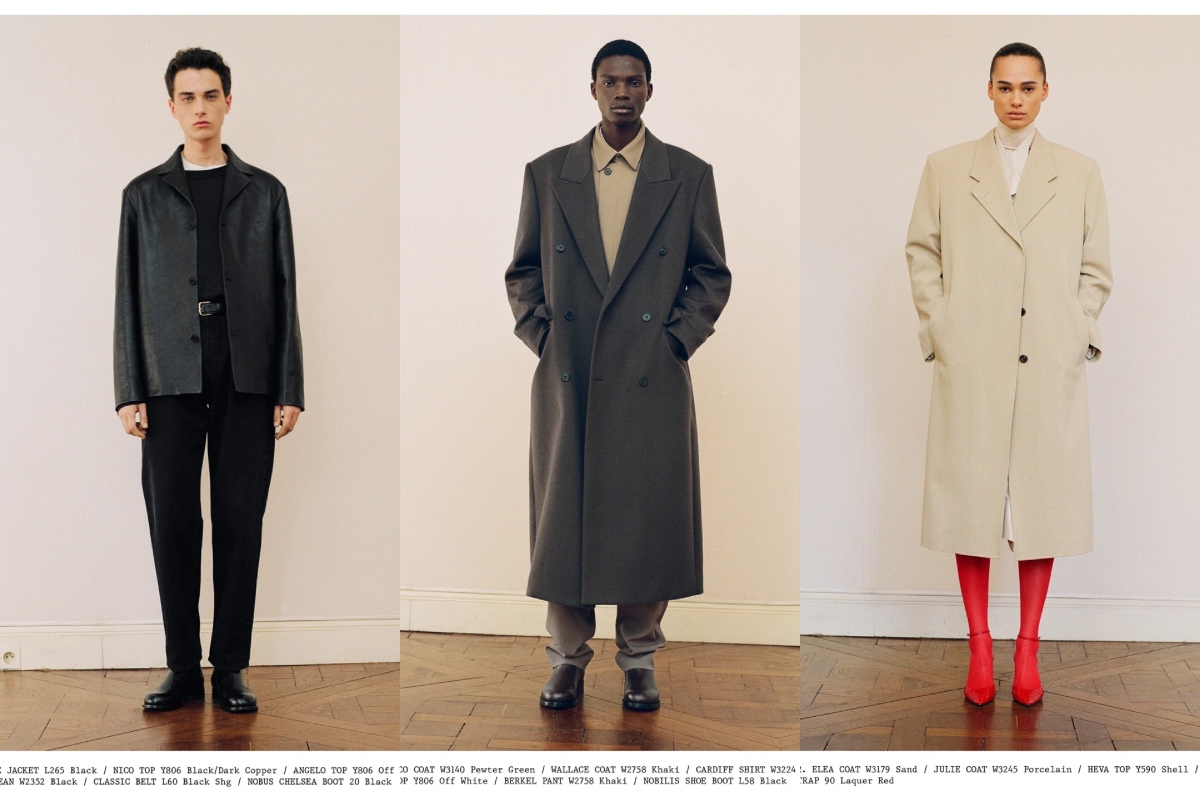
Low-Key Refinement Prior to Being Labeled: The Founding Outlook
The Row launched in 2006, years before «quiet luxury» became a marketing buzzword. From the beginning, the brand prioritized construction quality, fabric sourcing, and understated silhouettes over logos or seasonal gimmicks. This ethos naturally resists the collaboration model, which usually depends on visibility, novelty, and a limited-time sense of urgency.
Collaborations land best for names that flourish through pop-culture relevance — consider limited sneaker launches or street-style crossovers that vanish within minutes. The Row’s shoppers, on the other hand, are the row sale black top handle drawn to steadiness. Someone holding three or four the row handbags in her closet has no interest in a co-branded curiosity; they’re looking for another piece that fits seamlessly into a wardrobe built over years, not seasons.
This helps explain why the row-bags round-up discussion among resellers and stylists hardly ever touches on limited-edition drops. The label’s bag lineup — the Margaux, the Bourse, the Soft Lock — was built to remain lasting rather than promotional. Structurally, longevity and collaborative projects tend to work against each other.
Having been on the official schedule from 2015, the label’s runway events have avoided the theatrical staging and star-studded front-row display that frequently comes with partnership launches in the wider industry. The overall show holds every bit as restrained as the collection itself.
Why Declining Is Simply Good Business Sense
Scarcity has monetary significance, and The Row is attuned to this more keenly than most contemporary houses. Excessive collaborations chip away at a brand’s rarefied status. Resale prices for staple pieces risk softening if a glut of limited editions flood the market competing for attention. Instead, The Row has safeguarded the resale strength of its signature bag collections by keeping the product lineup tight and consistent.
Here’s why this counts in practical terms: the best row bags — predominantly the Margaux in its various sizes, as well as the Bourse and Soft Clutch — stay valuable over time precisely because they are never reissued in dozens of new colorways annually or redesigned around an outside designer’s logo stamped on the hardware. Someone buying the row bag now can fairly assume the identical form to persist, with little alteration, three years from now.
There’s also a pricing rationale. The row handbags usually range across the $2,000 to $6,000+ price band depending on size, leather, and hardware finish. At that price tier, customers are paying for durability and coherent design, not for participation in a cultural moment. An attention-grabbing collab would arguably undercut the exact traits buyers pay extra to obtain.
Looking at the economics, this approach also reduces production complexity. Partnerships demand fresh licensing agreements, co-manufacturing logistics, and advertising costs shared across dual identities. The brand’s lean, vertically integrated setup — understood to maintain limited retail doors and a purposefully limited wholesale footprint — isn’t designed to accommodate this type of scaling.
The Rare Partnerships That Did Occur
The brand hasn’t completely ruled out outside partnerships, but these occurrences are scarce yet meaningful. Notably, the label has now and then dabbled in footwear and select material sourcing partnerships instead of loud, co-branded apparel collections. These moves tend to be low-key to the point that those browsing the row fashion casually frequently remain unaware that a collaboration took place.
This stands in stark contrast to competitors. Luxury houses like Louis Vuitton or Fendi have run several headline-making artist and designer partnerships in just one year. In contrast, The Row’s method might see one understated partnership across several years — and when it happens, the label seldom promotes it through aggressive campaigns.
This shortage of collab reveals also feeds directly into buying behavior throughout a row sale. Because there’s no rotating cast of limited editions to chase, sale periods focus buyer attention squarely on core items — the tote bag, the Margaux, and signature outerwear — rather than scattering focus among new, one-off releases.
This reliability has also brought more predictability to resale and consignment shopping. Buyers searching for where to buy the row Margaux bag on secondary markets can generally trust that price standards stay anchored to a stable design language instead of shifting collaboration-driven hype waves.
Why This Matters Especially for the Handbags
Given that collaborations are essentially absent, the label’s design team has been free to hone in on perfecting a limited set of shapes instead of pushing out fresh designs for every marketing cycle. Introduced in 2016, the Margaux is, ten years later, still among the label’s most coveted styles — a rare feat in an industry where «it bags» usually fall out of favor within just a couple of years.
That same principle carries over to the row tote bag styles. Rather than releasing a new tote silhouette every season, the label has evolved gradually, tweaking proportions, strap details, or leather finishes while keeping the underlying character intact. This is a stark departure from brands that lean on collaboration-driven tote releases to manufacture seasonal buzz.
What follows is a side-by-side look at how The Row’s approach to bag releases differs from a conventional collaboration-driven luxury competitor.
| Category | The Row | Conventional Collaboration-Reliant Competitor |
|---|---|---|
| How often collaborations occur | Uncommon — occasional, low-visibility partnerships | Several annually, frequently high-visibility |
| How long a core bag shape stays in production | Often a decade or longer (e.g., Margaux since 2016) | Usually redesigned every 2–3 years |
| Marketing approach | Minimal, understated, limited press amplification | Heavy campaign push, influencer seeding |
| Resale value stability | Fairly stable, thanks to a restrained release schedule | Prone to swings with every fresh collaboration |
| Where the product is sold | Curated, with few retail doors and modest online reach | Broad wholesale and multi-brand retail exposure |
This comparison shows why shoppers looking into top row bags often come across a more compact, more consistent lineup compared to competitors — and why that steadiness is seen as an asset rather than a drawback.
A 2026 Shopper’s Guide to What This Means
For anyone considering a The Row purchase in 2026, the key point is simple: don’t expect a collaboration-driven release calendar, and build your buying strategy around core pieces rather than holding out for limited editions. Its e-commerce site along with select flagship stores continue to be the most reliable channels for genuine inventory, particularly for high-demand items like the Margaux.
Because production runs are deliberately modest, the most in-demand sizes and leather options within the row bag range can sell out and require a while before replenishment. Shoppers determined to get their hands on a specific piece should track the brand’s own channels rather than depending exclusively on third-party resellers, especially when trying to figure out where to buy the row Margaux bag in a specific size or leather.
Row sale periods, when they occur, tend to focus on ready-to-wear and select accessories rather than deep discounts on the most in-demand bag styles, reflecting the brand’s general reluctance toward anything that might dilute perceived value. This is consistent with how the brand handles all promotional activity — sparingly and with restraint.
In the end, how seldom The Row engages in collaborations isn’t a hole in its promotional playbook; it serves as the backbone of the label’s whole identity. Amid a marketplace flooded with co-branded clutter, the decision to abstain has emerged as one of The Row’s most distinctive — and most quietly effective — strategic decisions.